Energy and Resource Management
The Company places strong emphasis on the efficient management of energy and resources, recognizing the business risks related to energy and resource utilization. These include energy price volatility risk, reliance on fossil fuel risk, water scarcity, and climate change risks, as well as opportunities arising from improved resource efficiency, the adoption of advanced technologies and renewable energy, and long-term cost reduction.
Failure to adequately prepare for and manage these risks may harm the Company's competitiveness and business continuity. As a result, the Company prioritizes systematic management, operational planning, and continuous improvement in the use of energy and resources across all activities. This includes electricity consumption, fuel consumption (such as oil and liquefied petroleum gas), water management, and other resource use.
The Company is dedicated to maximizing resource efficiency, reducing environmental impact, and promoting the transition to sustainable energy use. The Company also encourages the use of renewable and alternative energy sources where appropriate, while raising employee awareness and engagement in energy conservation that align with sustainable development goals.
Policies and Management Approach
The Company manages energy and resource utilization through ISO 14001:2015, the standard for the Environmental Management System, which includes resource consumption, pollution control, and compliance with applicable laws and regulations. This system encompasses both the Theparak and Bang Phli factories, representing 100% of the Company’s factories in Thailand. Both factories are classified as designated factories regulated under the supervision of the Department of Alternative Energy Development and Efficiency (DEDE), Ministry of Energy, in accordance with the Energy Conservation Promotion Act B.E. 2535 (1992). As a large-scale food manufacturing facility with high energy consumption, the Company appoints designated energy managers for each factory in accordance with the number and qualifications required by law. The Company also conducts energy management audits and certifications through auditors licensed by the Department of Alternative Energy Development and Efficiency (DEDE). In addition, the Company submits its annual energy management report and certification results to DEDE within March of each year. To date, the Company has fully complied with all applicable energy laws and regulatory requirements within the specified reporting periods.
To ensure effective implementation aligned with its energy and resource reduction targets, the Company has established an Energy Management Policy in compliance with relevant laws and regulations. An Energy and Resource Management Working Team, comprising representatives from relevant departments, has been appointed to oversee, coordinate, and drive energy conservation and efficient resource utilization. The working team also reviews operations in alignment with the Green Industry criteria established by the Ministry of Industry. Key operational guidelines are as follows:
- Implement and develop effective energy and resource management systems. Ensure that energy and water conservation are an essential part of the Company’s operations in compliance with relevant laws and regulations.
- Improve work processes, technologies, and equipment to enhance energy and resource efficiency, reduce reliance on fossil fuels, and minimize environmental impacts.
- Set energy and resource conservation plans and goals each year and communicate them to all employees to ensure their comprehension and effective implementation.
- Instill energy conservation responsibility in the management and employees at all levels, ensuring cooperation and compliance with established measures, while monitoring progress and reporting to the Energy and Resource Management Team.
- Provide necessary support, including human resources, budget, time, training, and opportunities for employees to contribute ideas for improving energy and the cost-effective use of resources.
- Executives and the Energy Management Working Team review and update energy and resource management policies, goals, and operational plans annually.
1. Energy and Fuel Management
To become a green business organization and support the transition to a low-carbon society, the Company implements a systematic energy management policy. This includes setting targets for reducing electricity and fuel consumption in line with the organization's targets for reducing greenhouse gas emissions. The Company has also undertaken energy conservation measures, such as improving energy efficiency through upgrades to production and transportation processes, while simultaneously allocating capital expenditure (CAPEX) to projects that reduce fossil fuel consumption and increase the proportion of renewable energy in the long term.
Key Electricity and Fuel Management projects
Solar Roof Installation at KCG Logistics Park and Distribution Center
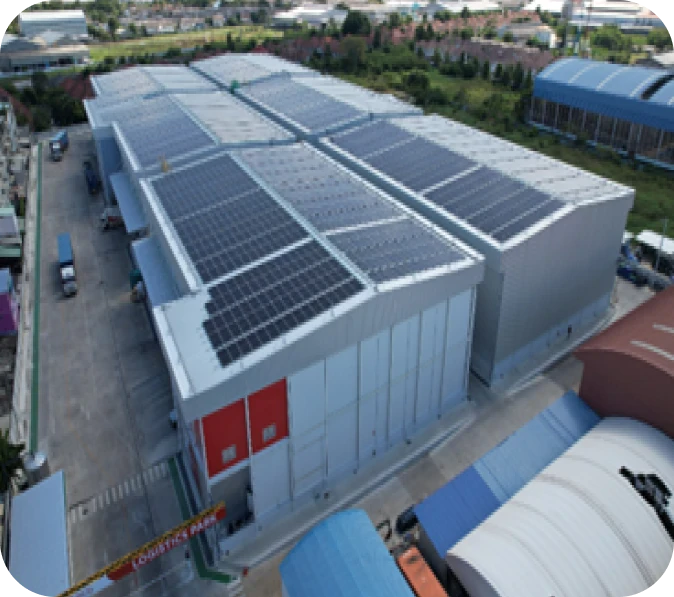
The Company began installing solar roof in 2020 at Theparak Factory, with an installed capacity of 1,107 kilowatts (kW), to be used as renewable energy within the factory. In 2024, the Company expanded installation of the solar roof to cover all five factories and distribution centers, including the Bang Phli Factory, the KCG Logistics Park integrated distribution and warehouse center, and distribution centers in Chiang Mai, Surat Thani, and Khon Kaen. This project was completed and commenced operation in November 2024.
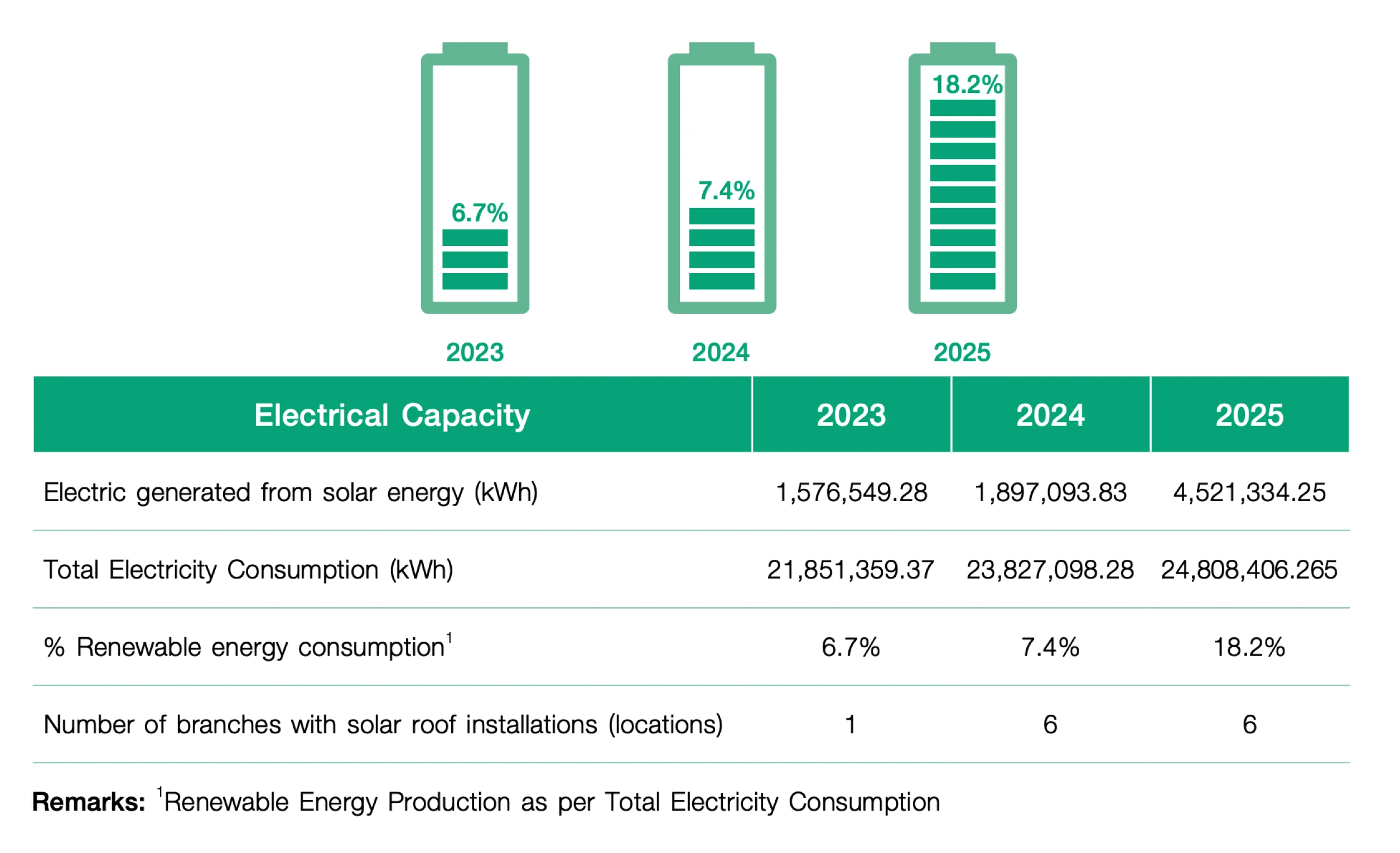
In 2025, the first year of full-capacity operation of the solar roof, the Company was able to generate a total of 4,521,334.25 kWh of electricity from solar energy. The five new solar roof installations in 2024 produced 65% of the total solar electricity, which raised the Company's renewable energy consumption from 7.4% to 18.2%.
The implementation of this project not only effectively reduces electricity costs but also significantly contributes to the Company's reduction of indirect greenhouse gas emissions (Scope 2). The Company approved a budget and work plan for expanding installation of the solar roof in 2026 to increase the proportion of renewable energy use and support the achievement of sustainable business goals, alongside the near-term and long-term goal of achieving net-zero greenhouse gas emissions.
Renewable Energy Consumption
Centralized Chiller System
The Company implemented a chilled water system optimization project by centralizing chilled water distribution through the installation of a new high-efficiency chiller. The upgraded system is equipped with an automated control system and Variable Speed Drives (VSDs) for chiller pumps, enabling operational adjustments in alignment with actual production load (%) requirements.
Since commencing operations in January 2025, the upgraded system has consistently supported all production lines and enabled the decommissioning of older, less energy-efficient chillers. As a result, Specific Energy Consumption (SEC) in 2025 decreased by 38% compared to 2024, reflecting a significant improvement in overall energy consumption
In addition, the system design enables centralized operational control, enhancing efficiency while ensuring sufficient production redundancy to maintain operational continuity and mitigate the risk of process disruptions.
This project supports the Company’s cost optimization objectives while reducing energy consumption and greenhouse gas emissions. It also aligned with the Company’s long-term sustainable business strategy. The Company plans to further expand the implementation of this project to the Bang Phli Factory in the following year.
Insulation Installation for Hot Water Piping – Fat & Oil Production Line
This project aims to enhance energy efficiency and minimize thermal energy losses within the production process through the installation of thermal insulation on hot water pipelines supplying heat to the Fat & Oil production line. The production area is maintained under controlled temperature conditions in accordance with quality assurance and food safety production standards.
Prior to project implementation, the hot water pipelines were not insulated, resulting in significant heat loss and elevated ambient temperatures within the production area. This condition increased electricity and fuel consumption by the air conditioning system and the hot water generation system beyond optimal levels. Insulation installation reduced thermal losses, stabilized production area temperatures, and lowered the operational load on the air conditioning system. As a result, the project contributes to energy reduction in both electricity consumption from the air conditioning system and fuel consumption from the hot water system. It also makes production more efficient overall and helps the Company reach its goals for energy management, cost control, and long-term sustainable factory operations.
Future Heat Loss Reduction Plan
The Company has established plans to implement additional energy conservation initiatives, particularly those focused on reducing heat loss within production processes, as outlined below:
- Air Compressor System Installation with Variable Speed Drive (VSD) and Heat Recovery System
The Company plans to install a high-efficiency air compressor equipped with a Variable Speed Drive (VSD) control system to ensure that operations are aligned with actual demand. This will help minimize energy losses and reduce overall electricity consumption. In addition, a Heat Recovery System will be installed to capture and reuse thermal energy generated during the air compression process. The recovered heat will be utilized by supplying hot water from the cooling system to production processes requiring thermal energy, thereby directly reducing liquefied petroleum gas (LPG) consumption.
This project will enhance overall energy efficiency, reduce energy costs from both electricity and fuel consumption, and lower greenhouse gas emissions. It aligns with the Company’s energy management objectives and long-term sustainable business strategy. The project is scheduled for implementation at the Theparak Factory in the first quarter of B.E. 2569 (2026).
- Energy Reduction in Boiler Systems
The Company also plans to expand its boiler energy reduction to the Bang Phli Factory, following successful implementation at the Theparak Factory. The project at Theparak Factory reduced LPG consumption by 1,027 kilograms per year. This project involves recovering and reusing excess condensate from the boiler system, thereby reducing the energy required for steam generation.
In addition, the Company has implemented various energy conservation measures, including machinery system optimization, equipment efficiency improvements, and the promotion of an energy conservation culture among employees.
Performance
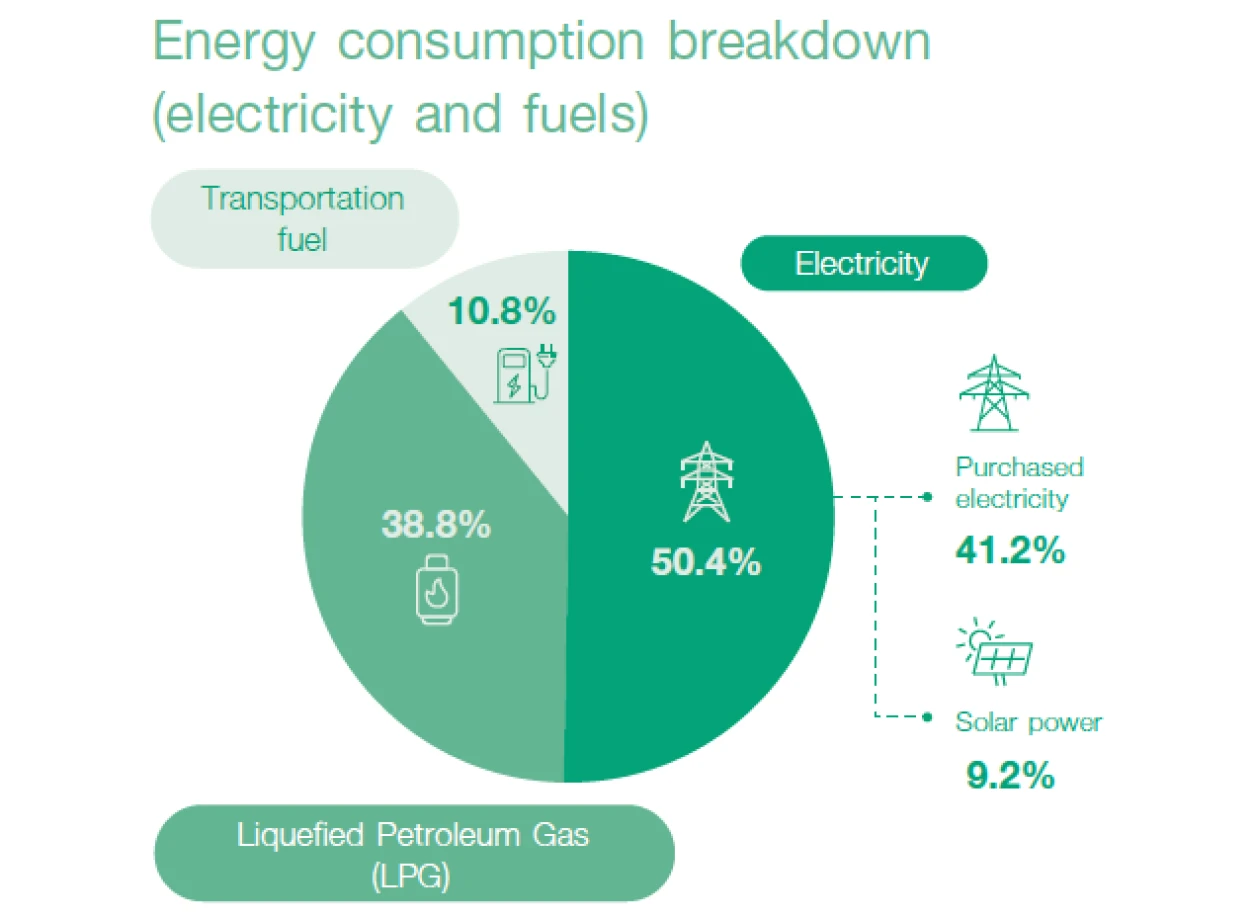
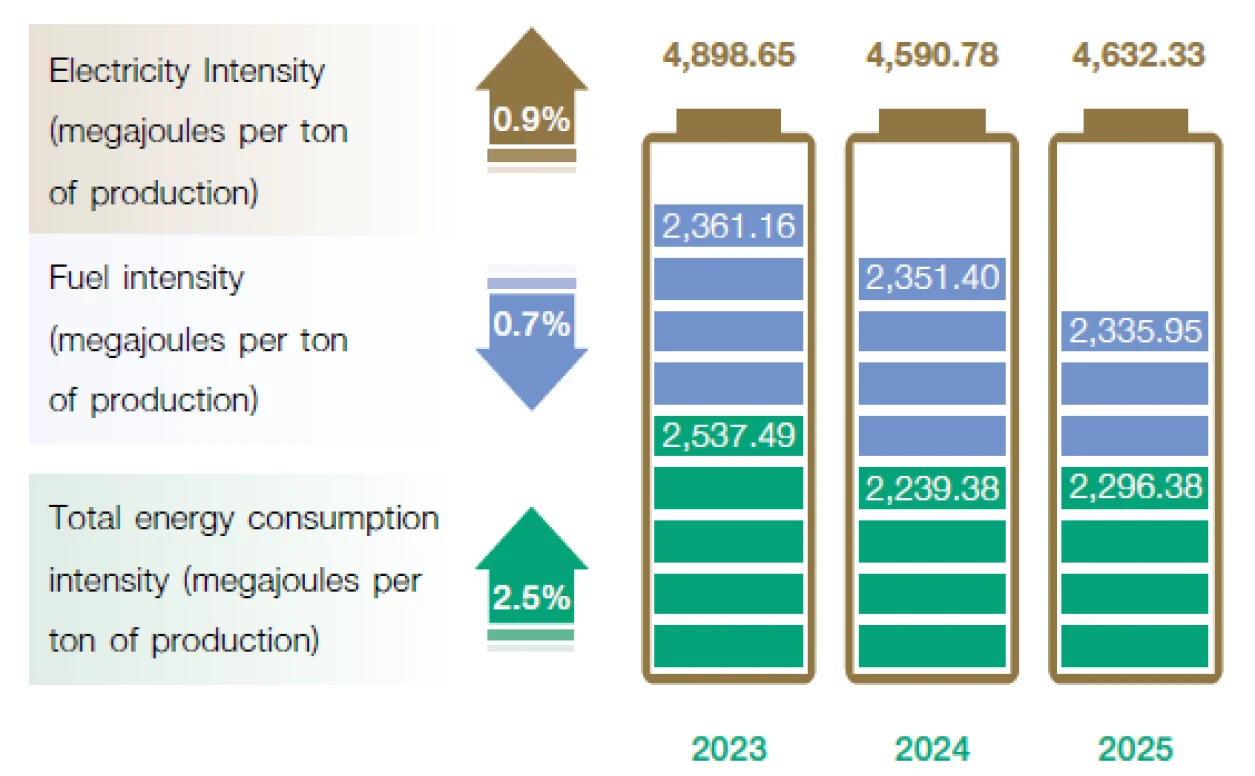
In 2025, the Company’s overall energy consumption comprised electricity, liquefied petroleum gas (LPG), and transportation fuel, accounting for 50.4%, 38.8%, and 10.8% of total energy consumption, respectively. Of the total energy consumption, 41.2% was purchased electricity, while 9.2% was electricity generated from solar energy.
Electricity and Fuel Consumption
Total energy consumption per unit of production
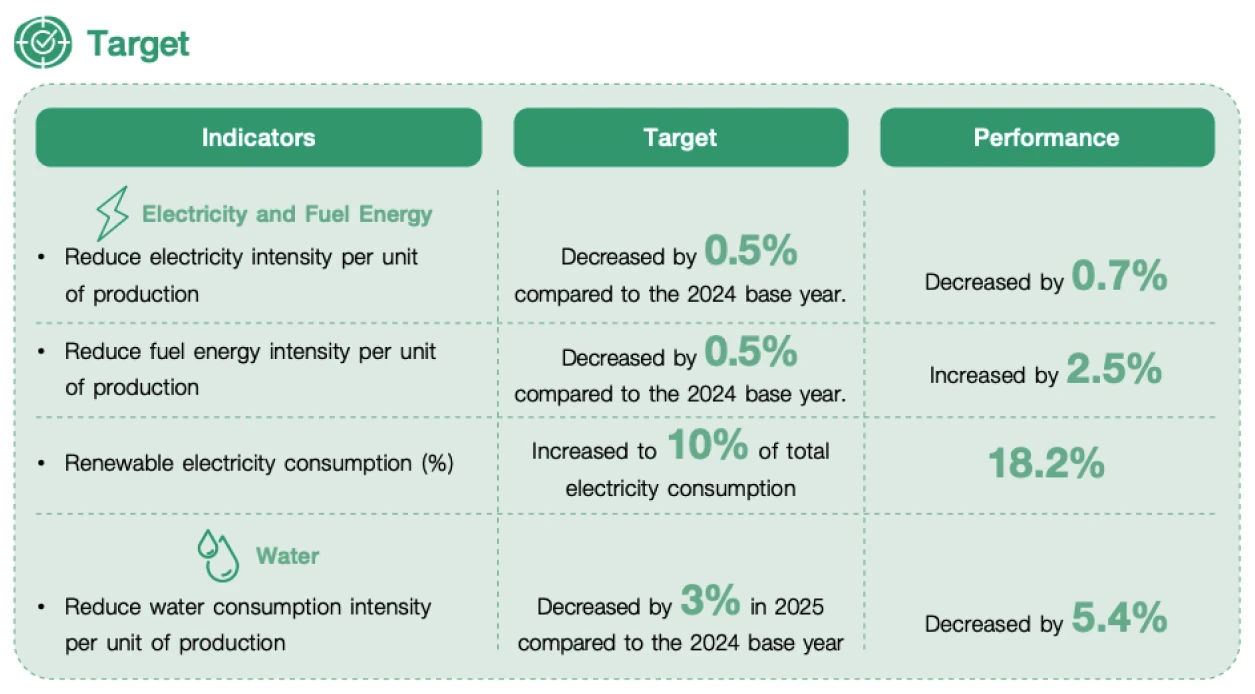
In 2025, the Company's electricity consumption per unit of production decreased by 0.7% compared to 2024, while fuel consumption per unit of production increased by 2.5%. This results in a 0.9% increase in total energy consumption per unit of production compared to the previous year. This change is primarily due to an approximately 3% decrease in total production resulting from a temporary shutdown of the butter production line for factory renovations and upgrades, leading to reduced energy efficiency per unit of production during that period.
However, the Company's total energy expenses in 2025 decreased significantly by 12.6 % compared to the previous year, resulting from efficient electricity management, an increased percentage of renewable energy use, and reduced fuel consumption for transportation.
Furthermore, the Company prepared additional energy conservation projects and related activities to enhance the efficiency of electricity and fuel consumption in accordance with the set targets and to support long-term sustainable business operations.
2. Water Management
The Company is committed to sustainable water resource management by establishing guidelines for efficient water consumption and legally securing water sources without impacting surrounding communities amidst increased severe global water resource challenges. Therefore, the Company prioritizes controlling and reducing the environmental impact on water from all its activities by managing wastewater to meet legal standards, as stipulated in the Notifications of the Ministry of Industry on Wastewater Discharge Control Standards from Factories B.E. 2560 (2017), and continuously seeks options to recycle and reuse water within the organization. This ensures optimal water resource utilization and supports long-term sustainable operations.
Water Risk Management Guidelines
The Company places great importance on water resource management, as water is a vital resource for production processes and a key raw material. Large quantities of water are used in various activities, and wastewater generated from production processes can negatively impact the quality of natural water sources, biodiversity in aquatic environments, and surrounding communities if not properly managed. Furthermore, the Company may face water risks from climate change, such as droughts, floods, and saltwater intrusion, which could affect the continuity of operations.
In 2025, the Company assessed and analyzed water risk from its operational locations using the World Resources Institute (WRI) AQUEDUCT Water Risk Atlas. The assessment revealed that the Company's factories are located in the Chao Phraya River basin, which is classified as a high water-stressed region. This poses risks from water supply and demand imbalances, as well as drought, flooding, and water level fluctuations. Meanwhile, distribution centers in Khon Kaen, Chiang Mai, and Surat Thani are located in areas with moderate water risk. The Company has implemented continuous monitoring and surveillance measures for these locations.
Based on the assessment, the Company has established water management measures covering all operational locations, using the requirements of the ISO 14001:2015 environmental management system as a framework. The two factories, accounting for over 90% of the Company's total water consumption, receive special attention. These measures focus on reducing water withdrawals from various sources, especially in high-water stress areas where the factories are located, as well as increasing water efficiency, managing wastewater appropriately, and mitigating water risks to support business continuity and minimize long-term environmental impact. The risk management measures and details are as follows:
Risk Assessment, Mitigation Plan, and Performance for Water Resources
| Risk | Mitigation Plan | Performance 2025 |
|---|---|---|
| Amount of water used in production |
|
|
| Quality of water used in production |
|
|
| Regulatory changes related to water |
|
|
| Conflict with surrounding communities |
|
|
| Financial impact of changes in water costs |
|
|
| Impacts on biodiversity |
|
|
| Flooding may affect the Company's operations |
|
|
| Suppliers' water resource risks, such as drought, may impact the Company's operations by reducing agricultural production from suppliers |
|
|
Key Water Management Projects
The Company implemented water management projects to achieve the goals of reducing water consumption, mitigating water resource risks, and managing wastewater efficiently. Key projects include:
Water Recycling
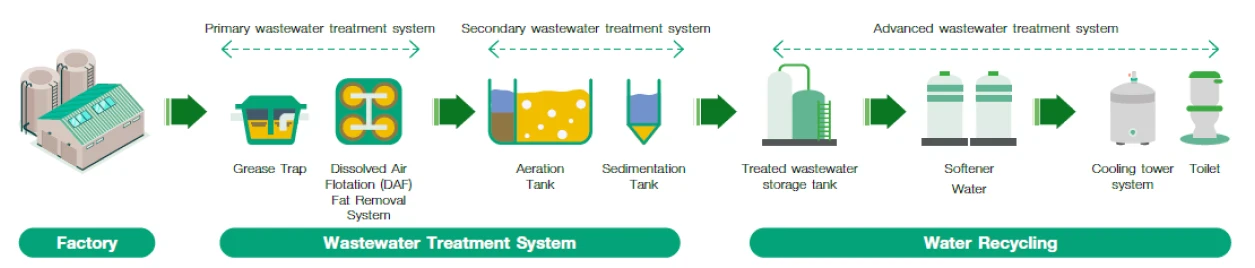
The Company manages wastewater treatment alongside water resource conservation to minimize tap water usage. This involves designing and selecting wastewater treatment systems suitable to the specific characteristics of the wastewater generated at each factory, ensuring effective pollution control and treatment. The treated wastewater is then reused within the factory for non-production activities, ensuring no impact on product quality and enhancing overall water management. This was done to maximize water management and improve its efficiency within the factory. Currently, each factory follows the water and wastewater management processes as follows:
- Theparak Factory - Wastewater from the factory enters the treatment system, where it undergoes an initial disposal or treatment process using a grease trap and dissolved air flotation (DAF). It is then sent to the second stage of the treatment, utilizing the activated sludge (AS) biological treatment system and sequence batch reactor (SBR) treatment system until the wastewater meets legal standards. After treatment, the water is of sufficient quality for reuse. The treated wastewater is directed into the softener water system and is used in the cooling tower system and for bathroom toilets.
In 2025, the Company installed an Activated Filter Media (AFM) system, a special filter media made from glass using an activation process. This system provides high filtration efficiency of up to 1 micron, effectively trapping bacteria, reducing the need for chemicals, and offering an extended operational lifespan. This significantly improves efficiency compared to conventional filter sand and allows for substantial water reuse.
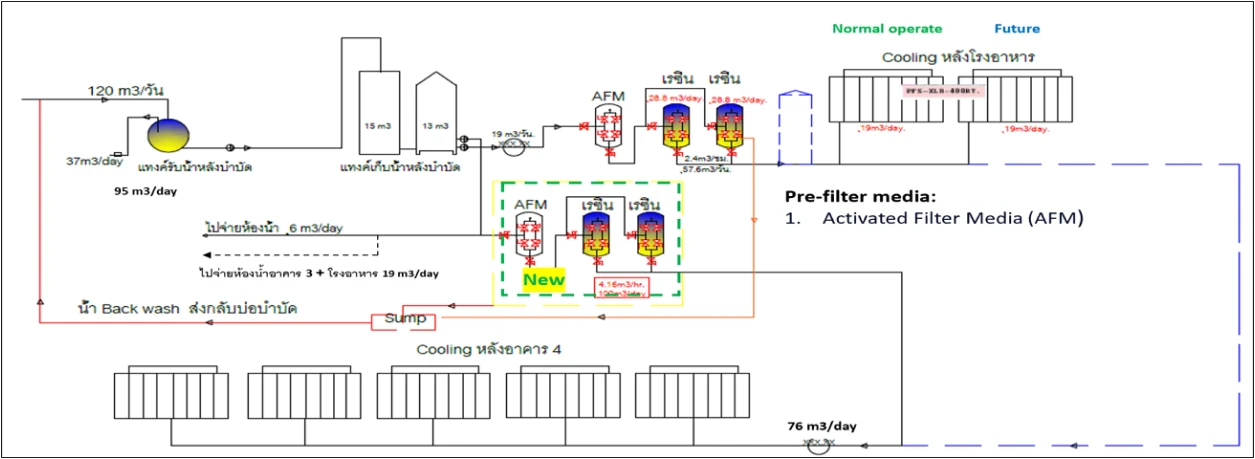
- Bang Phli Factory - Wastewater from the factory enters the treatment system, beginning with the initial removal or treatment process using grease purification and a grease trap. It is then sent to the second stage of treatment, where the activated sludge (AS) biological treatment system is used. This system includes three aeration tanks providing sufficient air for wastewater treatment, following the flow direction diagram, until the wastewater meets legal standards. The treated wastewater is stored in the Company's water tank and reused for activities such as watering trees, washing road surfaces, etc.
In 2026, the Company approved capital expenditure (CAPEX) allocation to develop a water recycling system at the Bang Phli Factory, applying the same approach as the previous water management project at the Theparak Factory. The project aims to increase water management efficiency, reduce water withdrawals from natural sources, and promote efficient water utilization in production processes, which is expected to reduce the overall water consumption of the Bang Phli Factory in the long term.
Treated Wastewater Quality Control
The Company maintains strict control over the quality of treated wastewater. Monthly wastewater quality monitoring is conducted by an independent private laboratory accredited under ISO/IEC 17025 standards. Samples are collected both before and after treatment to analyze performance and assess the efficiency of the wastewater treatment system. Monitoring parameters are in accordance with the Ministry of Industry’s Notification on Wastewater Discharge Control Standards B.E. 2560 (2017), ensuring strict compliance with applicable legal requirements.
Based on performance in the previous year, the Company was able to reuse 100% of treated wastewater within both manufacturing facilities. All operations were conducted in strict compliance with government laws and standards, without causing any environmental impacts.
Performance
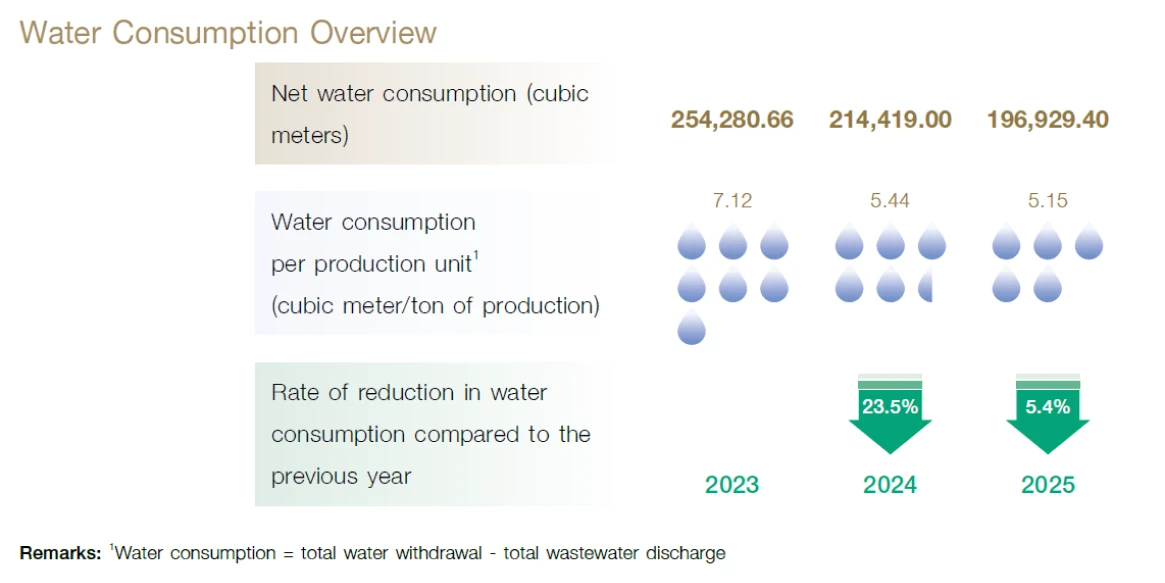
Through the implementation of water management measures, the Company maintained a sufficient water supply for operations in 2025. This enabled a continuous increase in the proportion of recycled water used in the production process, with no production disruptions arising from water quantity or quality issues, and without compromising product quality or safety. The Company fully complied with all applicable laws and regulations related to water consumption and wastewater management, and no complaints were received from surrounding communities regarding water or environmental impacts.
In 2025, the Company reduced water consumption per unit of production by 5.4% compared to 2024, exceeding the target of 3%. This achievement contributed to a significant reduction in water-related costs and reflects the Company’s efficient and responsible use of water resources.
The Company plans to further strengthen engagement with surrounding communities by conducting in-depth assessments of water consumption patterns, environmental impacts, and potential pollution concerns affecting nearby areas. The findings will be used to identify additional water management measures and collaborative approaches between the Company and the community to appropriately and sustainably prevent future water-related risks.
More information on other highlight energy and resource management projects is available in KCG Sustainability Report 2025
KCG Sustainability Performance Data 2025 - Environmental Performance