Corporate Governance
The Company operates in accordance with good corporate governance principles, transparency, responsibility, and ethics to support sustainable growth and build confidence among all stakeholders. The Company recognizes that ineffective corporate governance may result in compliance, corruption, and operational risks, potentially affecting its reputation, corporate image, investor and stakeholder confidence, as well as long-term competitiveness.
Therefore, the Company prioritizes the establishment of clear policies, regulations, and governance mechanisms, including appropriate checks and balances, and continuously enhances its corporate governance framework in alignment with international standards. This enables effective and appropriate risk management, mitigates potential losses, and reinforces credibility, while ensuring that business operations consider the impacts on society, the environment, and all stakeholder groups in all aspects.
Policies and Management Approach
The Board of Directors has established a Corporate Governance and Sustainability Policy to serve as a framework for directors, executives, employees, and stakeholders. The Corporate Governance and Sustainability Committee is responsible for overseeing, monitoring, and supervising the Company’s corporate governance practices to ensure they are appropriate, transparent, and responsive to the changing business context.
The Company conducts an annual review of the corporate governance policy and practices to ensure compliance with applicable laws and regulations, international best practices, and stakeholder expectations. These policies and practices serve as effective mechanisms for monitoring and evaluating corporate governance performance.
To enhance corporate governance in line with recognized standards, the Company has adopted regional and international corporate governance criteria and principles for policy formulation and operations. These include the ASEAN Corporate Governance Scorecard (ACGS), the OECD Principles of Corporate Governance, and the Corporate Governance Code for Listed Companies issued by the Securities and Exchange Commission, as well as international ESG standards and assessment frameworks such as the SET ESG Ratings and the FTSE Russell ESG framework.
The integration of these principles and criteria enables the Company to conduct its corporate governance practices with transparency and in alignment with international standards while supporting long-term sustainable growth. This framework encompasses 8 principles of the corporate governance code, which serve as the key foundation of the Company’s corporate governance management framework, as outlined below:
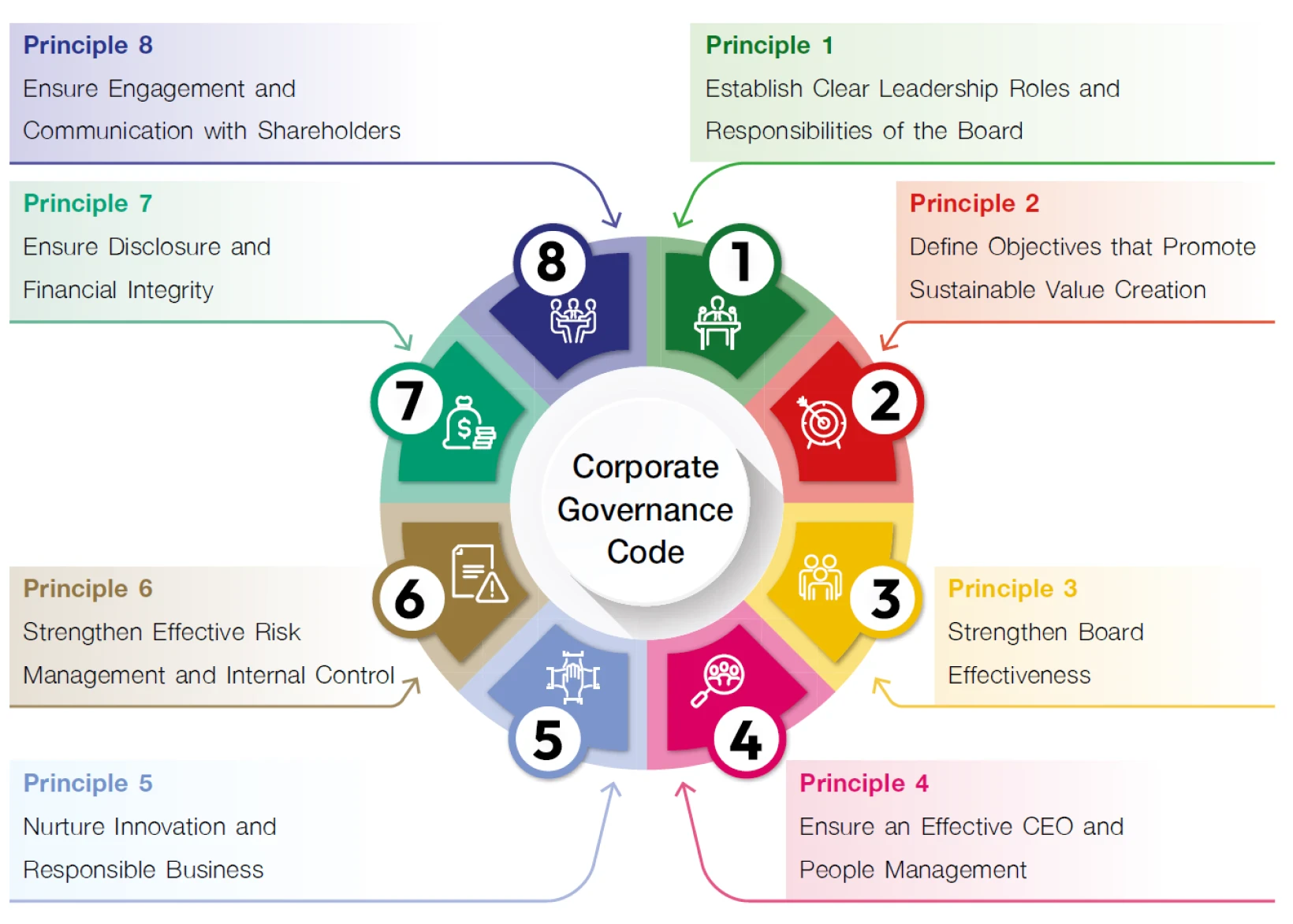
For more information available in:
Corporate Governance Structure
The Company’s Board of Directors and executives perform their duties in the best interests of the Company and its shareholders under a clearly defined corporate governance structure that ensures appropriate checks and balances and verifiability. The Board of Directors is responsible for setting policies, direction, and strategies, as well as monitoring and overseeing the Management Team’s execution of plans and achievement of targets. There is a clear separation of roles, duties, and responsibilities between the Board of Directors and the Management Team.
The Company’s corporate governance structure comprises the Board of Directors and 5 subcommittees: the Executive Committee, the Audit Committee, the Nomination and Remuneration Committee, the Corporate Governance and Sustainability Committee, and the Information Technology Committee.
KCG Corporation Public Company Limited’s Organizational Structure
as of January 1, 2026
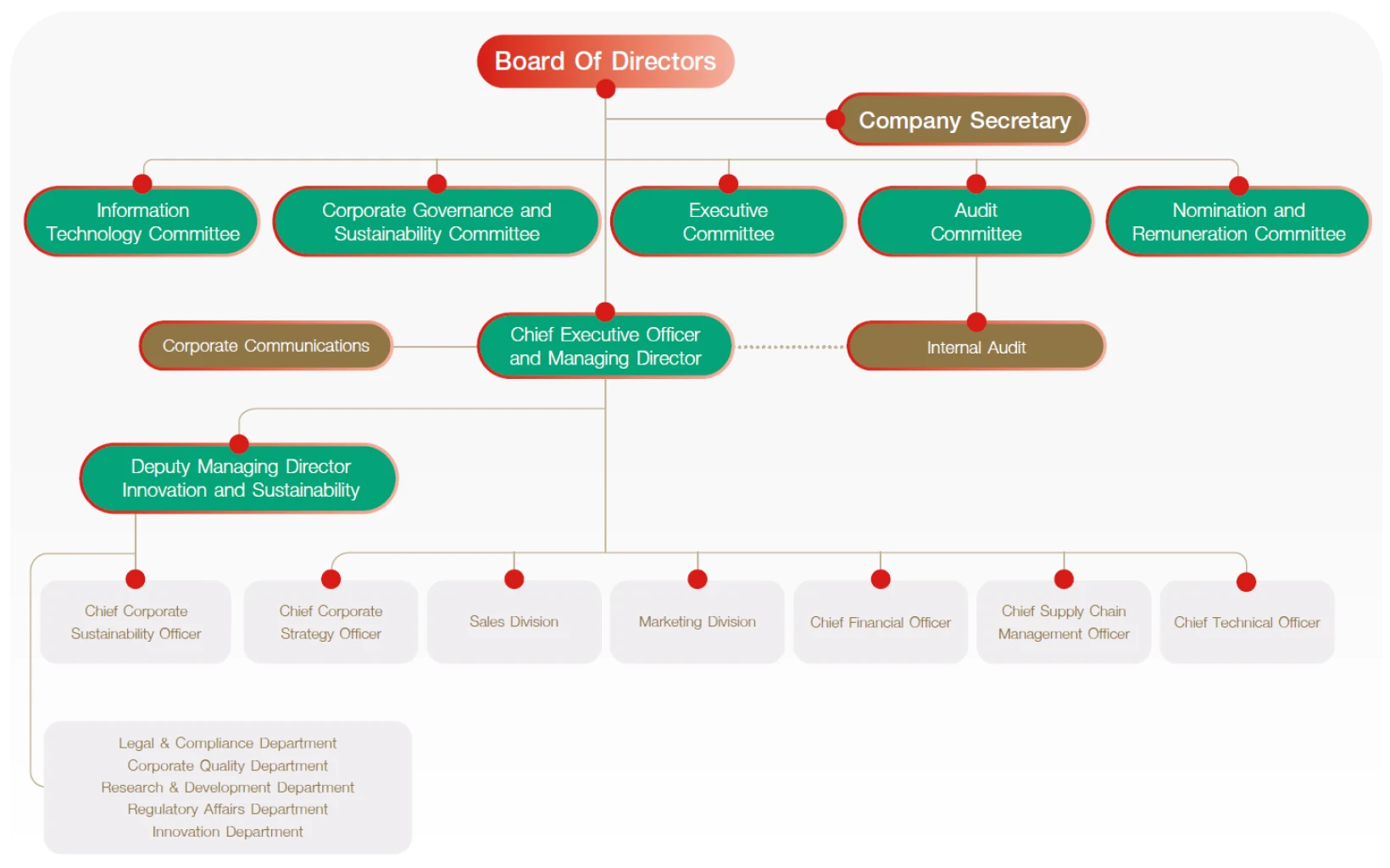
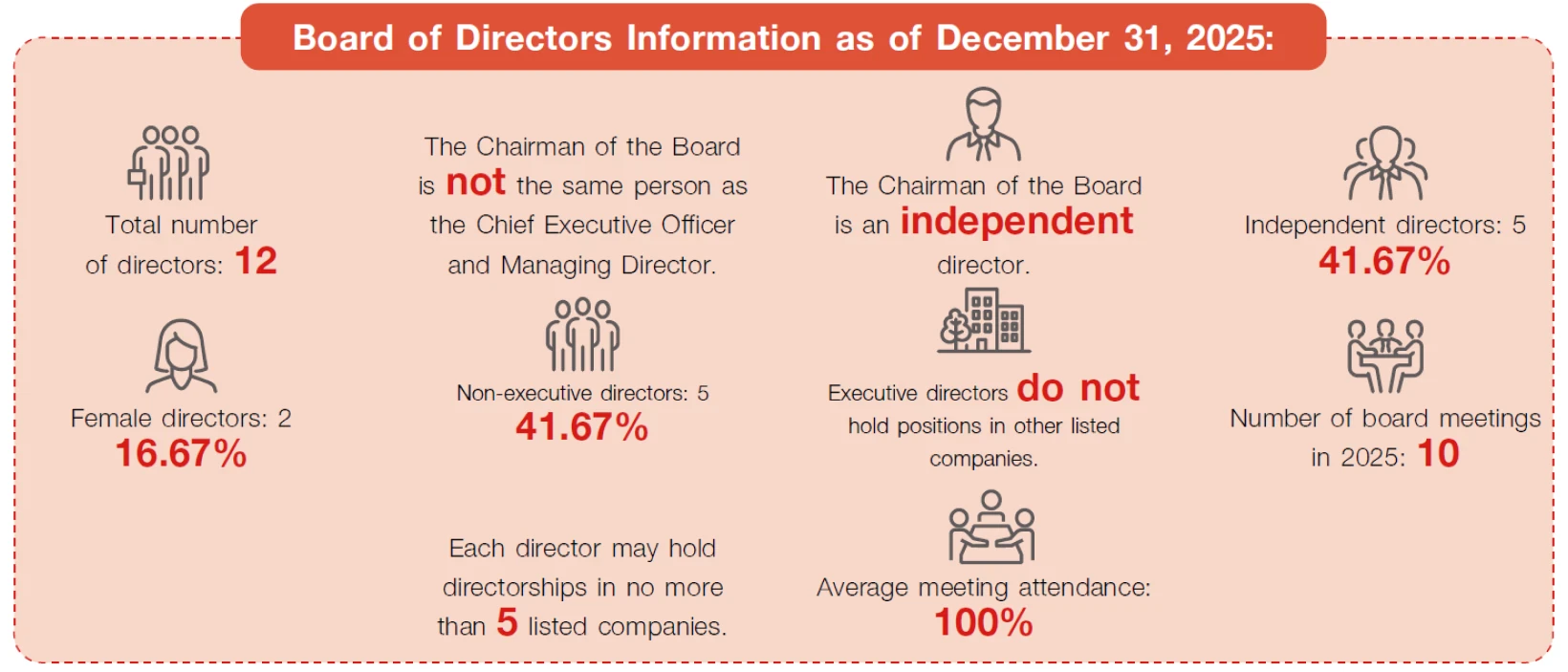
- Average Director Tenure: 3 Years
- All 3 members of the Audit Committee are independent directors with tenure not exceeding 9 years.
- Nomination & Remuneration Committee comprises 75% independent directors of the total committee members.
The Company complies with the Corporate Governance Code for Listed Companies B.E. 2560 (2017), as issued by the Securities and Exchange Commission (SEC). The Board of Directors reviews the application of these principles at least annually to ensure they are effective and appropriately adapted to the changing business context.
Furthermore, the Company has established key corporate governance policies, including a human rights policy, an anti-corruption policy, a conflict of Interest policy, an insider trading policy, and a personal data protection policy. These policies are published on the Company’s website, and compliance is regularly monitored.
The Board of Directors has assigned the Corporate Governance and Sustainability Committee to regularly consider, review, refine, and update the corporate governance and sustainable development policy, as well as related policies, at least once a year or as deemed appropriate to ensure alignment with international best practices and recommendations from relevant authorities before proposing them to the Board of Directors for approval.
The Company places significant importance on continuously promoting and enhancing the diversity of the Board of Directors. In 2025, the Company achieved its target for board diversity in terms of competencies. The Company’s directors have experience and expertise across diverse industries and professional fields. In regard to gender diversity, the Board currently comprises two female directors, representing approximately 16.67% of the total Board. The Company has set a target to improve the gender ratio to at least 30% by 2028. In terms of governance structure, The Company aims to increase the proportion of independent directors to more than 50%, compared to the current level of approximately 41.67%.
Code of Conduct
The Company has established guidelines for stakeholder engagement in the Business Ethics and Code of Conduct, taking into account all stakeholder groups, including shareholders, employees, customers, suppliers, contractors, communities, society, and the environment. The Company also promotes free and fair competition and prohibits actions that may result in conflicts of interest, intellectual property infringement, or any form of corruption.
For more information available in:
The Company expects all directors, executives, and employees at every level to be aware of, understand, and strictly comply with the Code of Conduct. A system is in place to regularly monitor compliance, and executives at all levels are required to act as role models, demonstrating a strong tone at the top. Furthermore, the Company promotes awareness among employees to ensure that business operations are conducted with honesty, integrity, fairness, and responsibility toward stakeholders and shareholders.
The Company has clearly defined procedures and disciplinary actions for violations of the Code of Conduct to prevent misconduct and corruption, safeguard the organization’s image, strengthen stakeholder confidence, and support sustainable business operations and organizational development.
In addition, the Company conducts compliance risk assessments related to its business operations and sustainable development. Processes are established to monitor, verify, and report compliance with applicable laws, regulations, business ethics, and the Code of Conduct. These processes include complaint handling mechanisms, whistleblowing channels, and anti-corruption measures. Reports are submitted annually to the Corporate Governance and Sustainability Committee to ensure that the Company’s operations adhere to the corporate governance code, maintain transparency, and remain free from corruption.
Communication and Promotion of Compliance with Corporate Governance Principles and the Code of Conduct
-
Promotion of Compliance with the Code of Conduct
The Company encourages directors, executives, and employees at all levels to develop knowledge, understanding, and awareness of the corporate governance code, Code of Conduct, and relevant laws, regulations, and practices. All new employees receive business ethics and code of conduct training as part of the orientation process before starting work at the company.
Furthermore, the Company discloses the Code of Conduct through its website, intranet, and internal communication channels to ensure that all personnel have access to the information and are able to comply with it consistently and appropriately.
-
Integration of the Corporate Governance Code into Performance Evaluation
In 2025, the Company enhanced its corporate governance and business ethics by integrating them into its human resource management system. “Governance and Ethics” was incorporated as a core competency for all employees. The assessment results are used for employee development, promotion, and annual remuneration adjustments, reinforcing concrete compliance with the Company’s Code of Conduct and related policies.
-
Corporate Governance Code Communication
The Company continuously communicates its corporate governance code and Code of Conduct to employees and stakeholders through various channels and activities to raise awareness and demonstrate its commitment to conducting business with transparency and responsibility, such as the following:
- Communicating morals, ethics, and anti-corruption through executive-led meetings and seminars with suppliers.
- Disseminating knowledge on the corporate governance code, internal controls, human rights, and work ethics through internal learning materials, with a target of 100% employee training and acknowledgement by 2025.
- Providing business ethics and code of conduct training for new employees, targeting 100% of employees by 2025.
- Emphasizing the anti-corruption policy and no-gift policy for all festive seasons and other relevant occasions and communicating these policies to customers, suppliers, and all relevant employees.
- Communicating policies on insider trading, information disclosure, and conflicts of interest to directors, executives, and employees, with a target of 100% participation by 2025.
Confidentiality of Information
The Company places significant importance on safeguarding the confidentiality of internal information, recognizing that certain data are sensitive and may affect the Company’s stability, reputation, and competitiveness if disclosed without authorization. Therefore, the Company has established policies and measures to ensure appropriate data governance.
Confidentiality of Information Guidelines
- Access Control: Access to sensitive information is restricted to authorized personnel only.
- Identity Verification and Authentication: Using password systems, digital signatures, and information security technologies such as SSL to grant access to information.
- Data Classification: Information is classified into Confidential Level, Secret Level, and Top Secret Level to determine appropriate control and protection measures based on the level of risk.
Anti-Corruption
The Company is committed to conducting business with transparency, upholding the rule of law, and recognizing the importance of combating all forms of corruption, considering it a significant threat to the country’s economic and social systems. The Company maintains a strict policy of not accepting or supporting any form of corruption, whether directly or indirectly. All employees are encouraged to perform their duties with honesty, integrity, and responsible citizenship toward society
Management Guidelines
In 2025, the Company announced its intention to join the Thai Private Sector Collective Action Against Corruption (CAC) on November 13, 2025. The Company completed the required documentation for certification in December 2025 and is currently in the approval process.
In accordance with CAC requirements and guidelines, the Company has improved its internal management processes by conducting corruption risk assessments across all organizational activities and determining strict preventive and control measures under the Company's Anti-Corruption Policy and the membership standards of the CAC. The key operational guidelines are as follows:
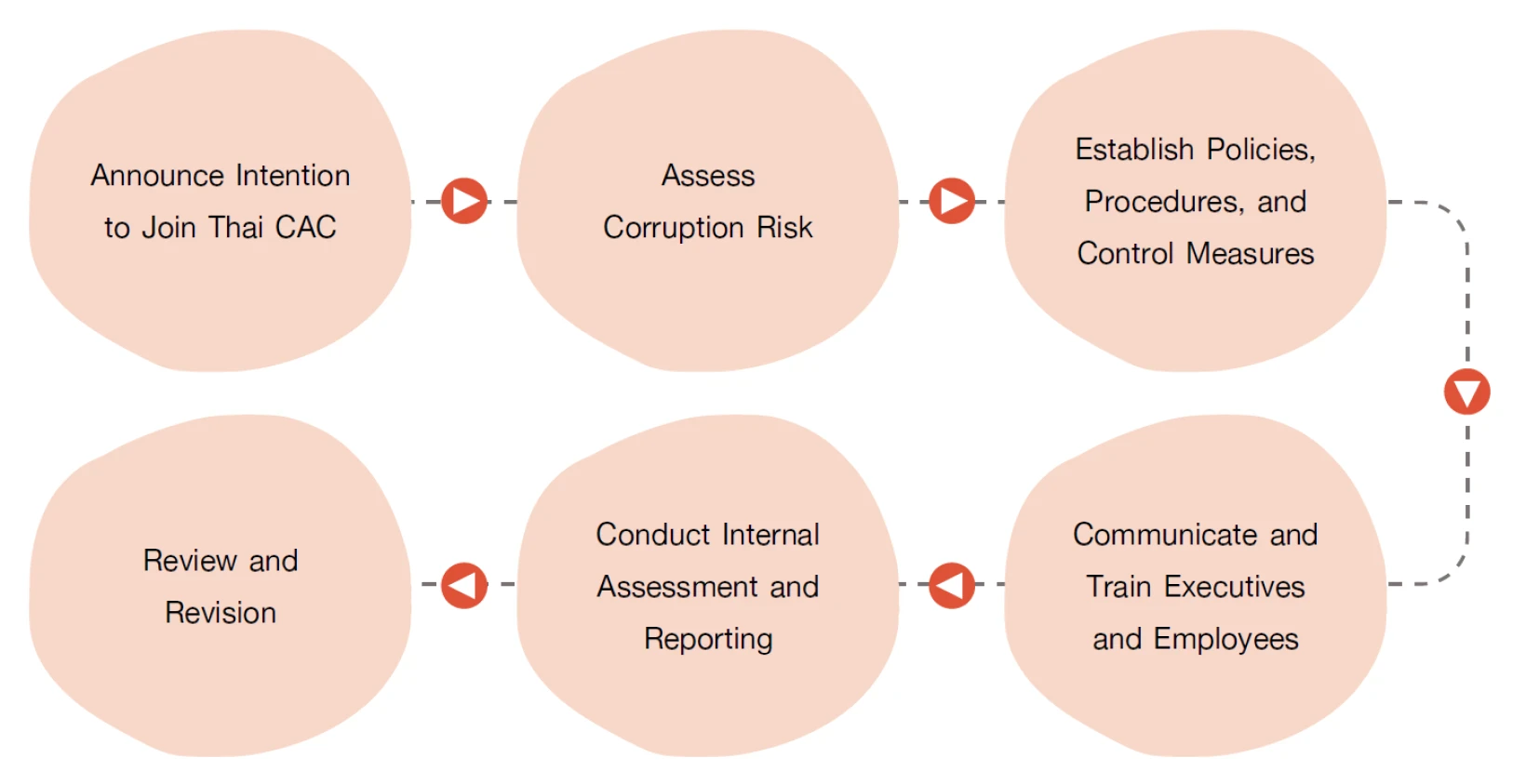
Establishing Written Policies, Procedures, and Control Measures
The Company has established a written Anti-Corruption Policy and related guidelines covering the giving and receiving of gifts or other benefits, entertainment, donations, and sponsorships to serve as a framework for the conduct of directors, executives, and employees at all levels. These policies and practices have been reviewed and updated to align with the requirements of the Thai Private Sector Collective Action Against Corruption (CAC) and were approved by the Board of Directors at Meeting No. 9/2025 on November 13, 2025. This reaffirms the Company’s commitment to conducting business with transparency and regulatory compliance for the benefit of society.
Corruption Risk Assessment
The Company has established a Collective Action Against Corruption Working Team, a sub-working team under the Sustainability and Risk Management Working Team (SRMT), comprising representatives from executives and relevant departments. This working team is responsible for assessing corruption risks across the Company’s activities.
The assessment process includes risk identification, risk impact and risk likelihood assessment, establishment of control measures and risk management plans, and ongoing monitoring. The Company plans to integrate corruption risk into its enterprise risk starting in 2026 and will establish a system for regularly reporting risk management results to the executive committees and relevant subcommittees.
Communication and implementation
The Company has communicated its Anti-Corruption Policy and related practices to all directors, executives, and employees to raise awareness and ensure strict adherence to the policy framework in daily operations. In addition, the Company has established measures to monitor and control the giving and receiving of gifts or benefits from various agencies and continuously reinforces its No Gift Policy to strengthen corporate governance standards and mitigate corruption risks.
The Company places strong emphasis on anti-corruption throughout its value chain by communicating its Anti-Corruption Policy and No Gift Policy to suppliers and business partners to promote collective efforts in upholding ethics, transparency, and sustainable business practices.
The Company has communicated the anti-corruption policy to 100% of its customers, suppliers, and business partners. In addition, 100% of directors, executives, and employees have received training and completed assessments on the policy. These actions aim to reinforce stakeholder confidence that the Company is firmly committed to conducting business in accordance with the corporate governance code and free from all forms of corruption.
Internal Audit and Reporting
The Internal Audit Department is responsible for auditing and monitoring operations to ensure compliance with anti-corruption policies and practices. This includes developing an annual internal risk audit plan and reporting audit findings to the Audit Committee for acknowledgement and oversight.
Review and Revision
The Company requires an annual review of the anti-corruption policy and related practices. In 2025, in addition to updating the Anti-Corruption Policy, the Company reviewed and revised its Whistleblowing Policy and related procedures to ensure alignment with the requirements of the Thai Private Sector Collective Action Against Corruption (CAC).
Whistleblowing Procedures
The Company has established a whistleblowing policy and procedures for corruption, violations of the Code of Conduct, and governance complaints. Whistleblowing channels are available to directors, executives, employees, customers, stakeholders, and any individuals who have information or observations relevant to a complaint. Reports may be submitted directly to the Audit Committee or the Chairman of the Audit Committee regarding suspected misconduct, fraud, embezzlement, violations of the Code of Conduct, or the promotion or support of actions that violate the Code of Conduct. The Company has established the following channels for whistleblowing and complaint submission:
Performance
- Through its commitment to disclose information in accordance with the Corporate Governance Code, the Company received a 5-star (“Excellent”) rating in the Corporate Governance Report of Thai Listed Companies (CGR) for 2025 from the Thai Institute of Directors (IOD), supported by the Stock Exchange of Thailand (SET). The Company was also ranked in the top quartile of listed companies with a market capitalization of Baht 3,000–9,999 million and achieved a perfect score of 100 on the AGM Checklist.
- Received the Thai Chamber of Commerce Business Ethics Standard Test Award 2025 (23rd Edition), organized by the Thai Chamber of Commerce and the Board of Trade of Thailand.
- Participated in the JUMP+ project to elevate its governance standards in alignment with national and international best practices. The Company has participated in the Stock Exchange of Thailand’s JUMP+, a project that supports listed companies in strengthening governance systems in a concrete and continuous manner. The Company created a three-year Corporate Governance Enhancement Plan as part of the program. This plan includes clear goals, key performance indicators, and action plans for significant areas such as risk management, internal control, and the code of conduct. The key action plans include:
- Enhancing Anti-corruption and Fraud Prevention Efforts Plan: Strengthening a culture of transparency, responsibility, and zero tolerance for all forms of corruption.
- Enhancing Whistleblowing Mechanisms Plan: Providing employees and stakeholders with secure, fair, and accessible whistleblowing channels.
- Enhancing Governance of Artificial Intelligence Applications Plan: Ensuring that the adoption of AI technology is ethical, transparent, and aligned with the corporate governance code.
- Enhancing Governance of Information Security Plan: Enhancing cybersecurity to protect the corporate data and information systems, supporting increased technology risks.
Participating in the JUMP+ project provides the Company with a systematic framework for developing and monitoring corporate governance, strengthening confidence among shareholders, investors, and stakeholders. This supports effective strategic decision-making by the Board of Directors and the Management Team. The Company will continuously monitor progress and report the results of each action plan to ensure that corporate governance enhancements deliver tangible and sustainable results.
In 2025, there were no complaints regarding violations of the code of conduct, business ethics, or corruption. There were 0 cases or incidents that violated the laws or sustainability regulations.
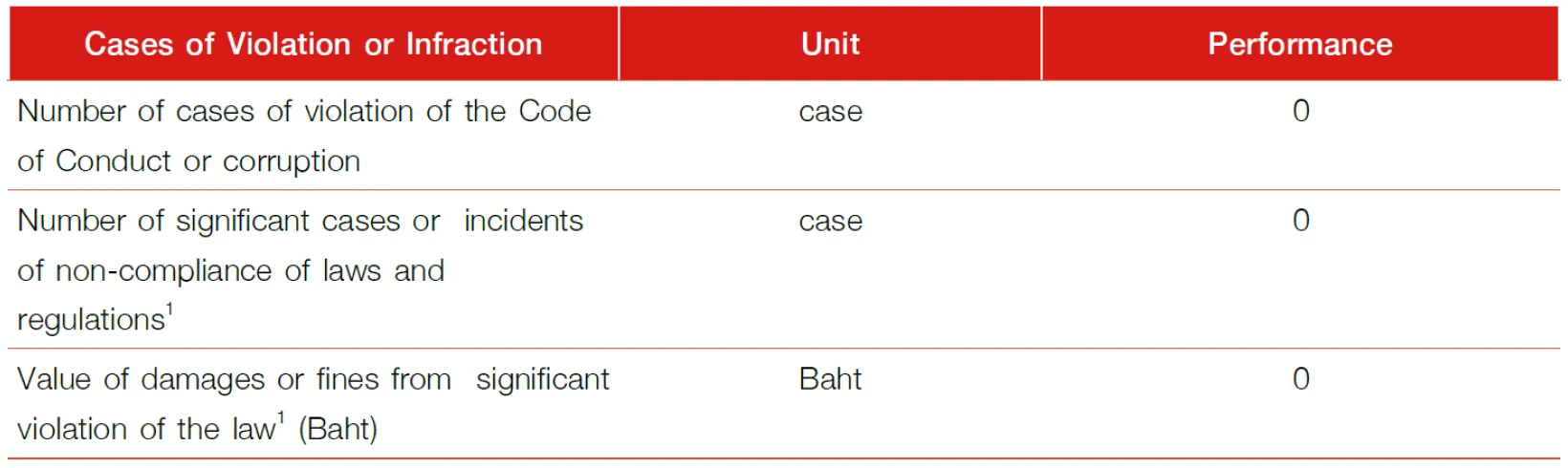
Remarks: 1Number of incidents of non-compliance with laws and regulations regarding business operations, products, services, product labels, advertising, and marketing, as well as incidents of violation of personal data, environment, and human rights.
KCG Sustainability Performance Data 2025 - Governance and Economic Performance