Occupational Health and Safety
The Company has acknowledged the occupational health and safety standards and created a safety culture under the occupational health and safety policy. The Company is dedicated to ensuring the well-being of employees and all stakeholders across its supply chain, providing a hygienic and safe working environment. The Company recognizes that every activity carries risks of accidents resulting from unsafe actions and unsafe conditions which could lead to injury, illness, property damage, or disruptions to critical production processes that affect the Company’s operation and its competitiveness.
Policies and Management Approach
The Company regards occupational health and safety as a fundamental priority in its business operations. Therefore, occupational health and safety have been incorporated as key components of the social development framework under the Company’s Sustainability Policy and are overseen by the Corporate Governance and Sustainability Committee. To ensure effective implementation of these policies and frameworks, and to foster a strong safety culture throughout the organization, the Company has adopted the ISO 45001:2018 Occupational Health and Safety Management System. In addition, the Company has established guidelines for occupational health, safety and work environment to enhance safety and mitigate risks for employees, executives, and external parties performing duties or conducting activities within the Company’s premises.
The Company has been certified with ISO 45001:2018, Occupational Health and Safety Management System, since 2024, covering operations at both factories: the Theparak Branch and the Bang Phli Branch. The certification is maintained through annual surveillance audits. In addition, an Environmental Management and Occupational Health and Safety Working Team has been appointed to oversee, monitor, and ensure compliance with the requirements and guidelines required under the standard, as follows:
- Comply with the applicable Occupational Safety, Health and Environment Act. adhere to the ISO 45001:2018 Occupational Health and Safety Management System requirements, and fulfill the Company’s Articles of Association and commitments to stakeholders.
- Systematically identify hazards, assess and manage occupational risks, including risks related to accidents, fire, chemicals, electricity, and transportation. Establish preventive and control measures to reduce work-related injuries and illnesses, as well as potential losses to life, property, production processes, and surrounding communities.
- Prepared crisis management and response for business continuity and contingency plans to ensure readiness for and mitigation of unforeseen events.
- Management at all levels is to demonstrate leadership and commitment to occupational health and safety by serving as role models and providing appropriate resources, personnel, time, budget, and training. Supervisors at all levels must lead by example, and all employees are expected to understand and strictly comply with established procedures.
- Promote employee participation and consultation in hazard identification, improvement suggestions, and the development of workplace safety measures.
- Communicate occupational health and safety performance and effectiveness transparently to both internal and external stakeholders.
- Monitor, measure, and evaluate occupational health and safety performance, including the investigation of accidents and near-miss incidents, to prevent recurrence and drive continuous improvement of the management system.
Performance
1. Occupational Health and Safety Risk Assessment and Mitigation Planning
To ensure comprehensive and efficient occupational health and safety operations, the Company adopts hazard identification and risk assessment to analyze risks, opportunity and likelihood that cover all work activities of employees, contractors, and external parties for normal events and emergency situations, leading to the formation of risk mitigation plans, risk control plans, and continuous improvement plans. The occupational health, safety, and workplace environment risk assessment is conducted annually.
2. Emergency Management
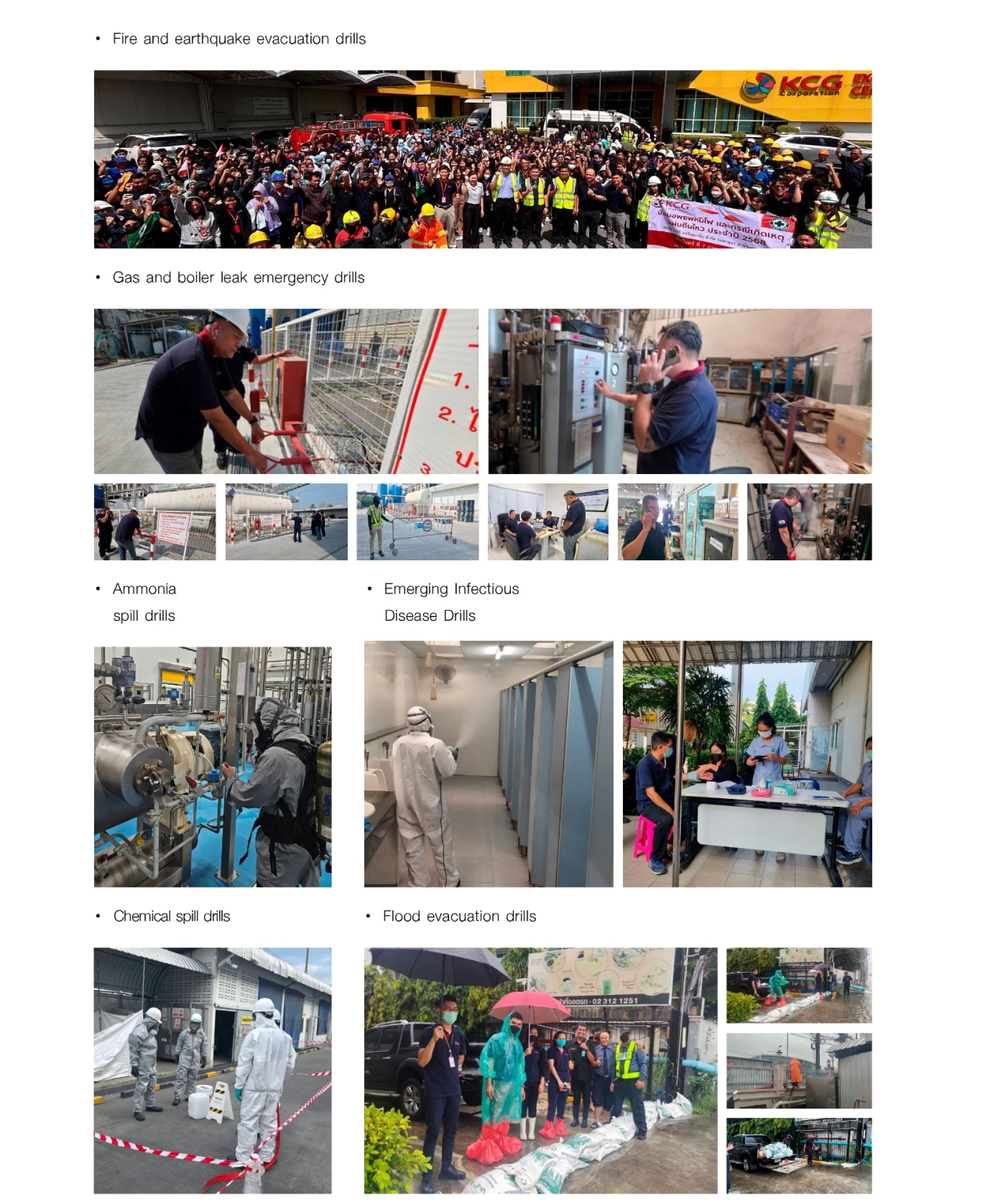
The Company has established safety measures and operational guidelines to ensure preparedness for various emergency situations, including the provision of safety equipment within the premises. In the event of an emergency, the Company implements preventive and response measures, conducts regular emergency drills, and provides training for all employees. These include annual fire evacuation drills, basic firefighting training, chemical spill and gas leakage response drills, as well as ammonia leakage evacuation drills in production and refrigeration processes for employees working in those areas. In addition, the Company communicates emergency evacuation procedures and safety guidelines to external parties entering the premises for activities, operations, or visits to ensure safety at all times.
- Accident and Emergency Response Measures
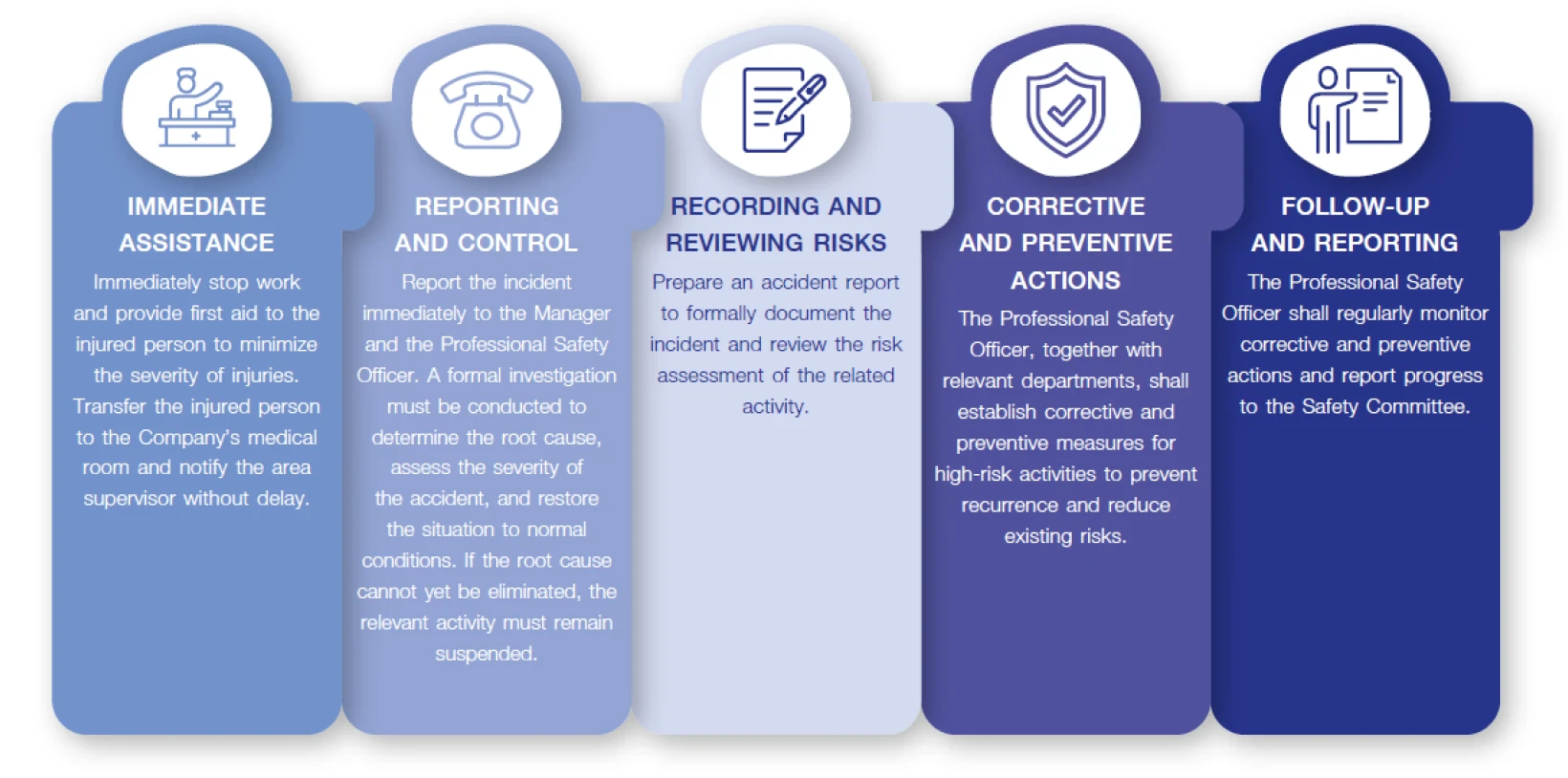
The Company places importance on the health and safety of employees, contractors, and external parties entering its premises. Therefore, the Company has established processes and guidelines for responding to accidents, emergency situations, and incidents that may pose potential hazards, as follows:
- Preventive Measures to Reduce Recurrence of Accidents and Emergency Incidents
- Investigate and analyze the root causes of accidents and near-miss incidents to establish appropriate preventive measures.
- Review hazard identification and reassess risks while implementing comprehensive risk control measures covering engineering controls, safety rules and regulations, and knowledge training.
- Review work procedures and safe work practices to ensure their effectiveness.
- Conduct proactive safety inspections, including the identification of hazards, near misses, and incidents; monitor corrective actions; verify the effectiveness of improvements; and prepare reports to support continuous improvement.
- Conduct emergency drills and continuously promote safety awareness through appropriate activities and communication channels, such as Toolbox Talks, Safety Briefings, and Safety Day activities
- Emergency Responses
To enhance operational readiness, test the effectiveness of response procedures, and continuously improve emergency response plans, the Company conducts annual emergency drills to reduce potential risks, minimize the severity of impacts, and safeguard the lives of employees and other stakeholders within the Company’s premises.
In 2025, the Company carried out emergency drills in compliance with applicable legal requirements, covering all of its operating locations.
3. Work Environment Inspection
Conduct environment and work safety assessments according to the plan. If any standards are not met, improvements and systematic monitoring will be implemented to ensure that the work environment is safe and does not negatively impact the health of employees, contractors, external parties on the premises, and the surrounding community, as required by law. The process includes:
- Survey the work environment with active work activities in each area and identify risk factors as follows:
- Chemical environment
- Physical environment
- Biological environment
The assessment identifies potential health hazard factors, including heat stress (Wet Bulb Globe Temperature: WBGT), lighting, noise, chemical agents, and the monitoring and assessment of indoor air quality.
- Conduct measurements, analyses, and evaluations, and compare the results with legal standards or recommended standards issued by recognized institutions or recognized organizations. Reports are prepared to provide observations and recommendations for further control and preventive measures.
- Prepare reports, feedback, and recommendations for further control and prevention measures.
In 2025, the Company arranged for a workplace safety inspection conducted by a certified private company with ISO 17025 and registered with the Department of Labour Protection and Welfare in order to control and prevent hazards in accordance with standards and legal requirements.
4. Promoting and Cultivating a Safety Culture
The Company has consistently promoted safety operations, emphasizing employee participation in creating a safety culture by conducting hazard identification activities through Safety Committee representatives from each work area, who work together to proactively identify risks on a weekly basis, leading to effective safety problem-solving in the workplace. Additionally, other safety promotion activities are organized, such as safety training for employees, Morning Talk sessions, and Safety & Environment Day events. These activities provide safety knowledge in various forms, fostering a safety culture within the organization.
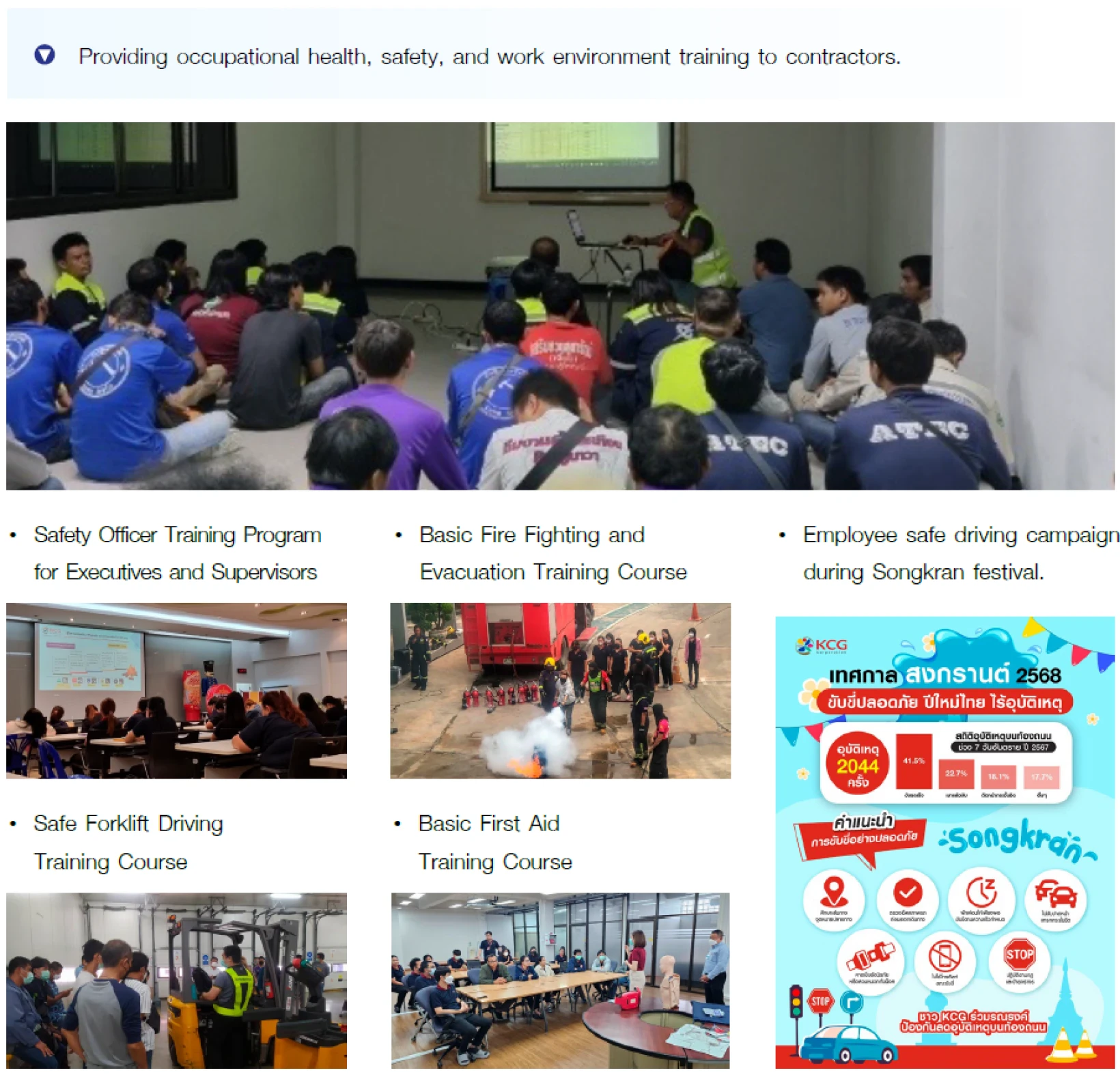
- Occupational Health, Safety and Work Environment Training
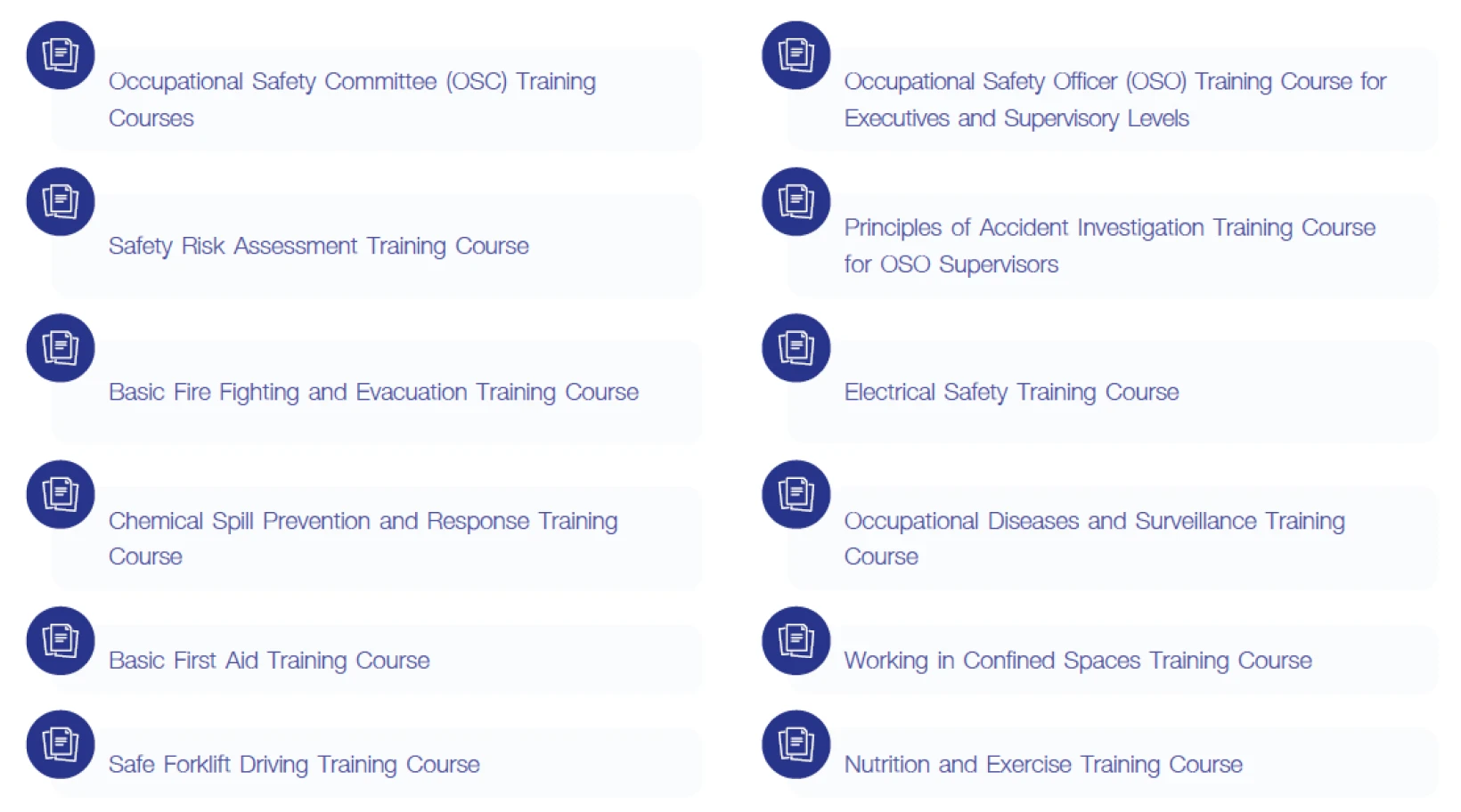
In 2025, the Company continued to conduct training on occupational health, safety, and work environment in compliance with laws and the Company’s Article of Associations. A total of 100% of employees and contractors participated in the training programs, covering all designated target groups for each course.
These training programs were designed to enhance knowledge, strengthen understanding, and improve readiness for safe work practices, reducing the risk of accidents and work-related illnesses. The Company conducted 12 key training courses, as follows:
Health and Well-Being Promotion
The Company is committed to promoting and maintaining good health among employees, reducing the risk of work-related injuries and illnesses. Annual health check-ups and medical examinations are provided for employees working in areas with safety-related risks. A full-time nurse is stationed at the Company’s medical room to provide preliminary medical treatment at no cost to employees.
In addition, the Company organizes health promotion activities to support employees’ physical well-being, such as the Talk Therapy and the Healthy Hack activities, etc.
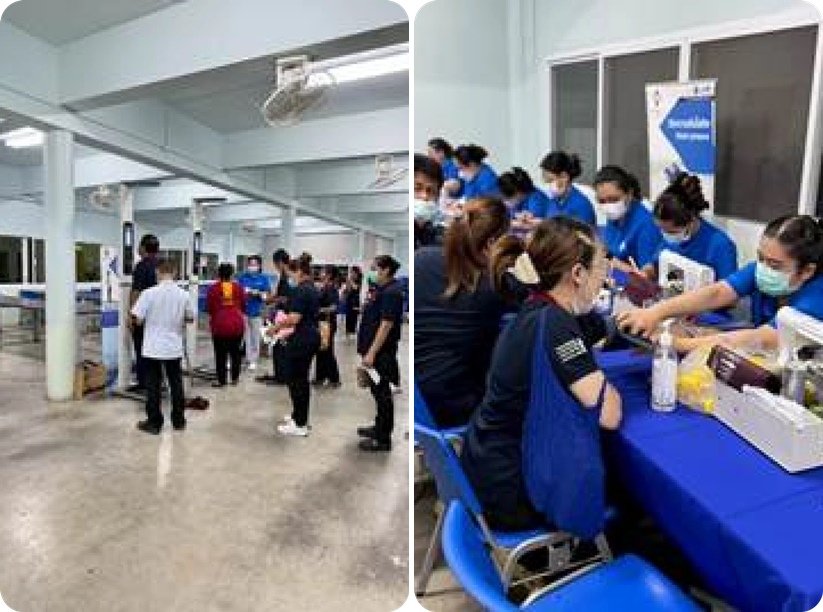
- Annual Health Check-Up
The Company provides annual health check-ups for both employees and workers who are not employees to monitor their health status, facilitate early detection of conditions such as diabetes, hypertension, and hyperlipidemia, and reduce the risk of work-related accidents.
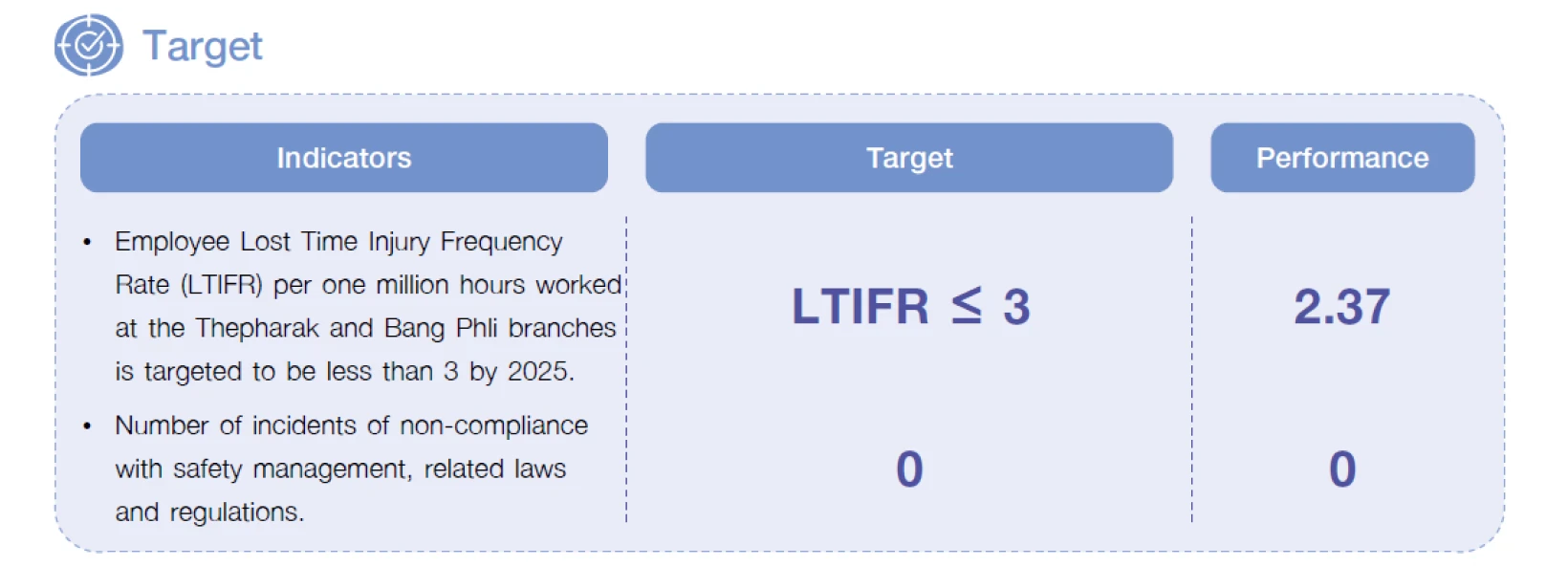
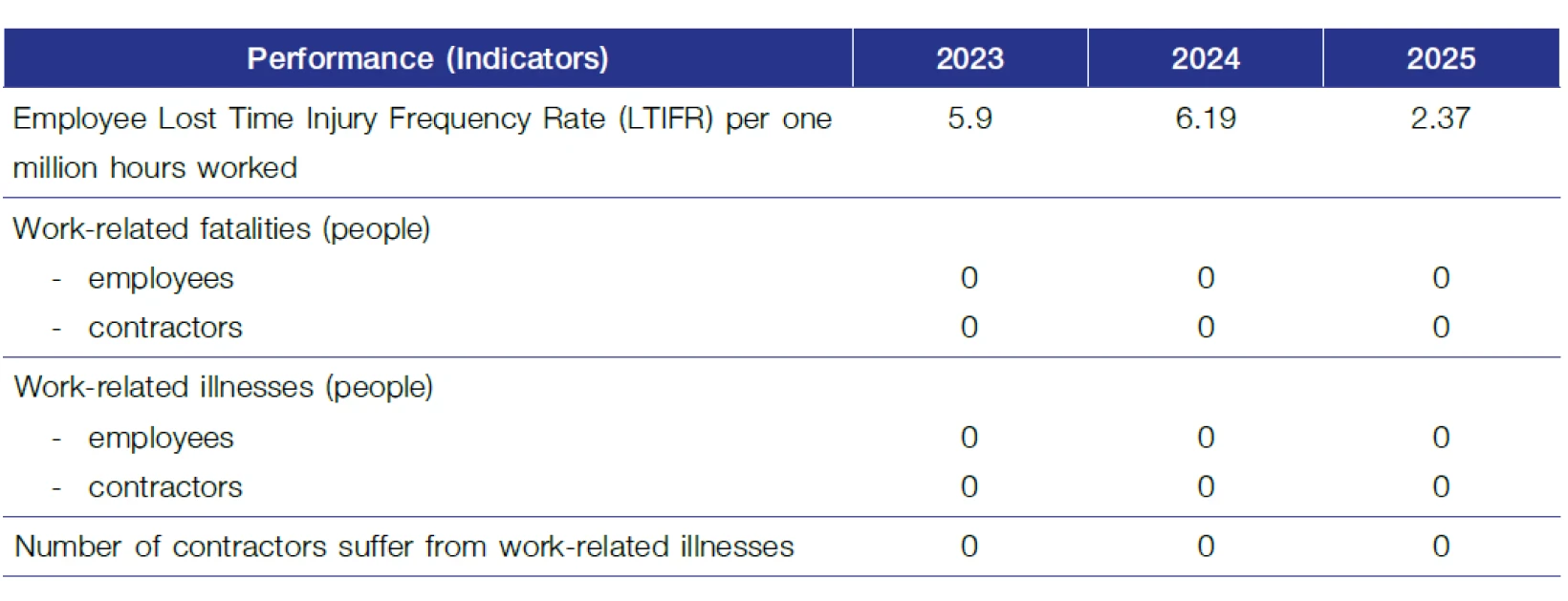
Based on the aforementioned operations, no serious work-related injuries were reported in 2025. The Lost Time Injury Frequency Rate (LTIFR) for employees was 2.37 incidents per million working hours. In addition, no cases of noncompliance with safety management-related laws, regulations, or other applicable requirements were discovered, confirming the Company's strong commitment to safety standards and regulatory compliance.
Nonetheless, the Company conducted thorough investigations into each incident while taking appropriate corrective and preventive action. These included ensuring that machinery was properly maintained and ready for operation, having regular morning safety talks, inspecting personal protective equipment (PPE) and safety devices to ensure readiness, and consistently communicating safe work procedures. These actions aim to reduce recurrence and strengthen a culture of workplace safety.
Statistics of accidents, occupational health, and safety of employees
KCG Sustainability Performance Data 2025 - Social Performance